
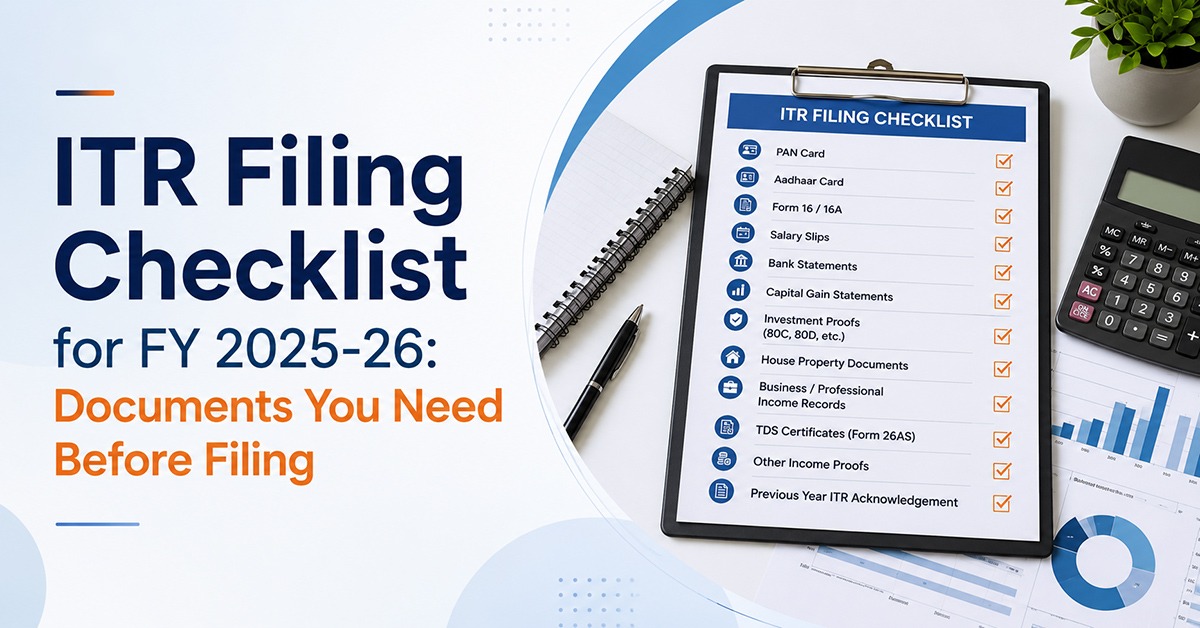
The income tax season can feel like a looming deadline for many. But it doesn't have to be a harrowing experience if you're prepared. Getting your documents in order before you start filing your Income Tax Return (ITR) can save you time and a lot of hassle. Let's dig into the checklist of documents you need to make the FY 2025-26 ITR filing as smooth as possible.
Basics First: Know Your PAN and Aadhaar
Your Permanent Account Number (PAN) and Aadhaar are your unique identifiers in the tax system. Without these, you're nowhere. Make sure your Aadhaar is linked to your PAN; the government has made this linkage mandatory. A mismatch could delay your filing process or even result in penalties. If you've changed your phone number recently, update it to receive OTPs for verification.
Linking Aadhaar with PAN
It's simple but crucial. Head to the Income Tax Department's e-filing portal and follow the instructions to link your Aadhaar with your PAN. Do this well before the last-minute rush.
Salary Slips and Form 16
If you're a salaried individual, your employer should provide you with Form 16. This is a summary of your salary, deductions, and taxes paid throughout the year. Keep your salary slips handy as they offer a detailed breakdown of your earnings and deductions, something Form 16 might gloss over.
Understanding Form 16
Form 16 has two parts: Part A and Part B. Part A is a summary of the tax deducted and deposited on your behalf, while Part B is more detailed, showing your gross salary, deductions under Chapter VI-A, and other income details. Double-check these against your salary slips for accuracy.
Interest Income Statements
Interest from savings accounts, fixed deposits, or recurring deposits is taxable. Banks will send you an interest certificate that details how much interest you've earned. If you have investments in post office schemes, remember to include those too. Missing these can land you in trouble for underreporting income.
TDS on Interest
Banks deduct TDS on fixed deposits if the interest exceeds ₹40,000 in a year (or ₹50,000 for senior citizens). Check if you need to claim a refund or pay additional taxes based on your total income.
Investment Proofs for Deductions
Investments can significantly reduce your taxable income. Make sure you have proofs for all tax-saving investments under Section 80C, such as PPF, ELSS, NSC, and the like. If you've bought a new insurance policy or invested in a pension scheme (NPS), keep those documents too. Remember, deductions can add up to ₹1.5 lakh under 80C.
House Property and Rental Income
Do you own a house or earn rental income? If so, you'll need documents like the property deed, home loan interest certificate, and rental agreement. If you have a home loan, the interest component can give you a deduction of up to ₹2 lakh under Section 24(b).
Joint Property Ownership
If the property is held jointly, ensure you have clarity on how the rental income and tax benefits will be divided. Consult a tax advisor if you’re unsure.
Capital Gains Statements
Sold any shares or property? Capital gains tax might apply. Collect transaction statements for shares or mutual funds and sale deeds for property. These documents help calculate the gains and the applicable tax rate, which varies based on the holding period.
Set off and Carry Forward
If you’ve incurred capital losses, you can set them off against gains or carry them forward for up to eight years. Keep detailed records to maximize these benefits.
Foreign Income and Assets
If you've earned income abroad or hold foreign assets, these must be declared. The Foreign Assets Schedule is part of the ITR form. Not disclosing these can lead to severe penalties under the Black Money Act.
Double Taxation Relief
India has tax treaties with several countries. If you’ve paid taxes abroad, you might be eligible for relief under Section 90/91. Gather proof of foreign tax payments to claim this.
Miscellaneous Documents
Don't overlook other relevant documents like donation receipts for Section 80G deductions, medical bills for Section 80D, and education loan interest under Section 80E. These can help in reducing your taxable income further.
Digital Payments and Cash Transactions
Keep an eye on your cash transactions. Deposits over ₹10 lakh in savings accounts or ₹50 lakh in current accounts need to be reported. Digital payment records can also be relevant if they show large transactions.
So what's the surprise twist in all this? A little-known deduction under Section 80TTA allows you to claim up to ₹10,000 on interest earned from savings accounts. It’s often overlooked but can make a difference.
Cracking the ITR Filing with Ease
Armed with the right documents, filing your ITR doesn't have to be a last-minute scramble. Organization is key. Start early, and maybe you'll even enjoy the process this year.
FAQ
What happens if I miss the ITR filing deadline?
Missing the deadline can lead to a penalty of up to ₹10,000. Plus, you won't be able to carry forward certain losses. It's advisable to file on time or even apply for an extension if needed.
How do I correct errors in my filed ITR?
If you spot errors after filing, don't panic. You can file a revised return. The revised return must be filed by the end of the assessment year or before the assessment is completed, whichever is earlier.
Do I need to file ITR if my income is below the taxable limit?
If your gross income is below the taxable limit, you're not required to file an ITR. However, filing can be beneficial for record-keeping and is often required if you plan to apply for loans or visas.